
 EN
EN
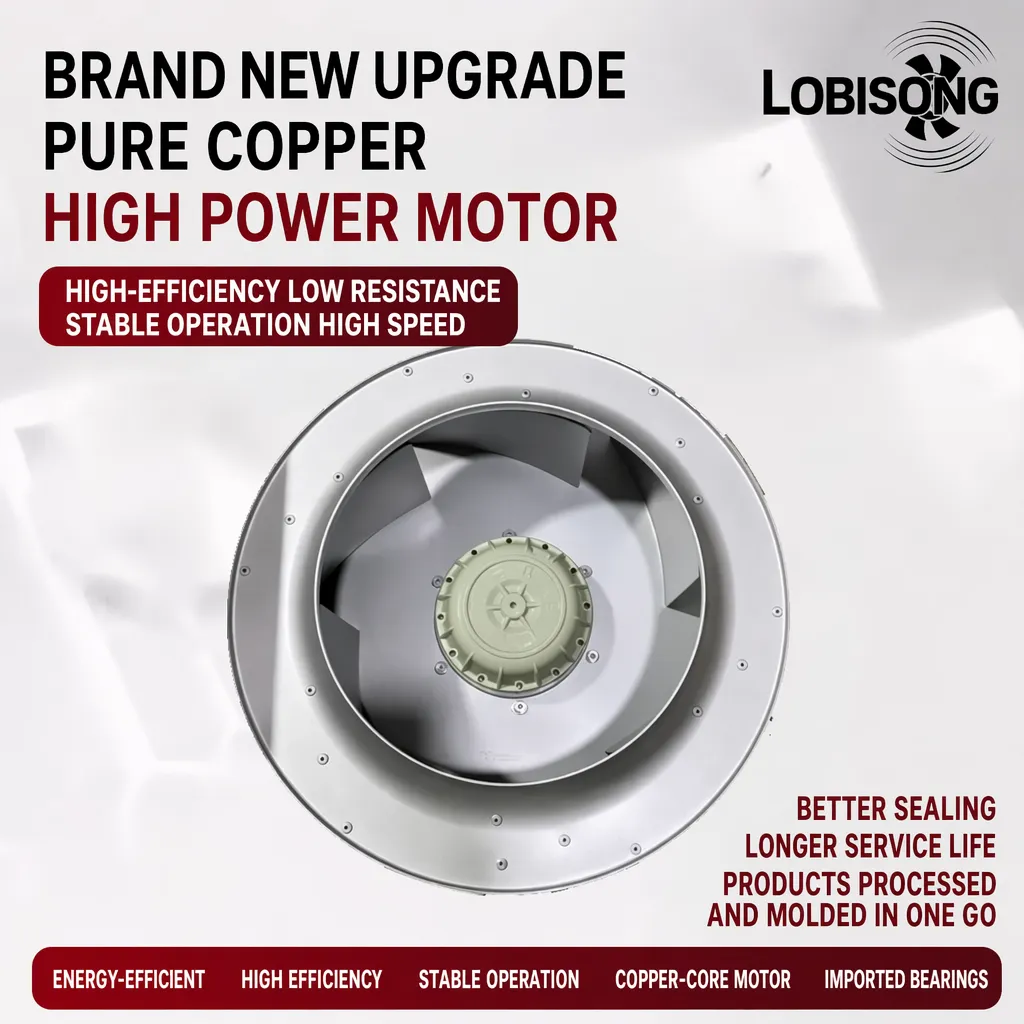
What Anti Corrosion Coating Selection for Backward Curved Fan Used in Coastal Industrial Zones
Working with thermal management systems near the coast has taught me one thing above all else: the environment does not just challenge airflow performance — it attacks the fan itself. When a stainless steel backward curved fan is installed in a coastal industrial zone, the combination of salt-laden air, high humidity, industrial fumes, and UV radiation creates corrosion conditions that can degrade even well-chosen base materials within a few years if the surface protection is inadequate.
The question of coating selection is not just about aesthetics. It is about the long-term operating reliability of the fan, the maintenance intervals your customer will face, and ultimately the total cost of ownership — not the unit price.
Why Coastal Industrial Zones Are a High-Corrosion Challenge
Before selecting a coating, it helps to understand exactly what category of corrosion environment you are dealing with. The ISO 12944-2 standard classifies atmospheric corrosivity into categories from C1 (very low) to C5 and CX (extreme). Coastal industrial zones typically fall into C4 or C5-M:
- C4 (High) covers industrial and coastal areas with moderate salinity. This is common for facilities 1–10 km from the shoreline or port zones with controlled emissions.
- C5-M (Very High — Marine) applies to coast and sea areas with high salt content. Outdoor industrial cooling fans installed within direct sea spray range, or in facilities processing chlorine-generating or acidic materials, often fall here.
Even a stainless steel backward curved fan built from 304 or 316 grade steel is not immune. Stainless steel resists general corrosion well, but pitting corrosion from chloride ions in high-salinity coastal air can penetrate the passive oxide layer over time, particularly at welded seams, machined shaft surfaces, and areas with mechanical surface damage. Adding a properly selected coating system extends service life and maintains dimensional stability of rotating components.
The Three-Layer Coating System: How It Works for Fan Applications
The most reliable approach for backward curved fans in C4–C5-M environments is a three-layer protective coating system. Each layer serves a different function, and the sequence matters.
Layer 1: Zinc-Rich Epoxy Primer
The primer layer is the first line of defense. For coastal industrial environments, zinc-rich epoxy primers are the standard starting point. The zinc particles act as sacrificial anodes. They preferentially oxidize in the presence of chlorides and moisture, protecting the steel substrate underneath. This electrochemical protection mechanism continues even if the topcoat is scratched or chipped, which is important for rotating fan components that are subject to abrasive particle impact.
If your fan is operating in an environment classified as C5-M, zinc phosphate primers or two-component epoxy zinc primers specifically formulated for marine conditions are worth specifying. The film thickness on the primer layer for C5-M applications is typically above 80 µm dry film thickness per the ISO 12944-5 guidance.
Layer 2: Epoxy Intermediate Coat
The intermediate coat provides barrier protection by physically blocking chloride ions, moisture, and oxygen from penetrating to the primer or substrate. High-build epoxy or epoxy mastic coatings are commonly used here. The thicker the intermediate coat, the longer the diffusion path for corrosive agents. For fans running as outdoor industrial cooling fans in a salt-spray environment, a high-build epoxy with 100–150 µm dry film thickness in the intermediate layer significantly reduces long-term corrosion risk.
The main thing to watch — or actually the first thing to verify before applying the intermediate coat — is surface adhesion compatibility with the primer. Not all epoxy intermediates bond equally well to all zinc-rich primer types. Confirming coating system compatibility before specification avoids delamination problems in the field.
Layer 3: Polyurethane or Phenolic Topcoat
The topcoat provides UV resistance, chemical resistance, and final abrasion protection. For coastal industrial fans, two topcoat types are widely used:
- Polyurethane (PU) topcoat: Excellent UV resistance, good flexibility, and strong resistance to a broad range of industrial chemicals. Polyurethane topcoats perform well in outdoor settings with sun exposure. For stainless steel backward curved fans installed on building rooftops or external air handling units in coastal zones, PU topcoats are a practical choice.
- Modified epoxy phenolic or baked phenolic topcoat: Higher chemical resistance than standard polyurethane, particularly suited for fans handling acidic, solvent-laden, or high-temperature exhaust air. If the fan is handling process air from chemical production, offshore platforms, or pulp and paper facilities, phenolic or epoxy-phenolic systems provide more durable chemical barrier properties.
Powder Coating as an Alternative for Indoor Wetted Components
For internally mounted backward curved fan components (impeller housings, motor brackets) that are not directly exposed to outdoor salt spray but are in high-humidity coastal facilities, epoxy or polyurethane powder coatings offer a practical alternative to liquid paint systems. Marine-duty powder coatings developed for long-term salt spray resistance provide uniform coverage on complex fan geometries and are widely used for cabinet and enclosure cooling fans in coastal factory environments.
In most of the industrial installations I have reviewed, powder-coated interior fans fare well when the substrate preparation is thorough. Sandblasting to SA 2.5 minimum before coating is non-negotiable in high-humidity environments. When corrosion failures occur, they typically trace back to inadequate surface prep rather than coating chemistry.
Matching Coating Selection to Operating Conditions
The right coating for a stainless steel backward curved fan in a coastal industrial zone depends on the specific operating conditions. Here is a practical decision framework:
| Environment | ISO 12944 Category | Recommended Coating System |
|---|---|---|
| Coastal area, moderate salinity, 2–10 km from sea | C4 | Zinc-rich epoxy primer + epoxy intermediate + PU topcoat |
| Direct coastal / port zone, high salt, outdoor fan | C5-M | Marine-grade zinc primer + high-build epoxy + PU or phenolic topcoat |
| Chemical plant + coastal, acid / solvent exposure | C5-M or CX | Zinc primer + epoxy mastic + baked phenolic or fluoropolymer topcoat |
| Coastal factory interior, humidity not salt spray | C3–C4 | Epoxy or PU powder coat over sandblasted substrate |
If the application falls outside the standard ranges above, such as offshore platforms or desalination plant exhausts — the coating selection should be escalated to a specialist. Fan manufacturers that export to European and North American coastal industrial markets can typically provide coating specifications cross-referenced to ISO 12944 categories on request; confirm this before finalizing the supply order.
What to Check Before Specifying the Fan and Coating Together
Coating selection and fan specification should not be treated as separate decisions. A few practical checks before finalizing the order:
- Confirm the corrosion category of the installation site using ISO 12944-2 criteria, including distance from sea, salt deposit rate, humidity, and any process chemicals in the exhaust stream.
- Verify the fan manufacturer's coating system specification includes primer type, intermediate coat specification, topcoat type, and total dry film thickness, not just a generic statement of "anti-corrosion paint."
- Check that the coating system is compatible with the operating temperature range of the fan. Baked phenolic coatings cure at high temperature and may need to be excluded for temperature-sensitive assemblies.
- For outdoor industrial cooling fans in high-UV coastal zones, confirm the topcoat has a defined UV resistance rating to prevent chalking and degradation of the barrier layer over time.
- Ask for a salt spray test result (ASTM B117 or ISO 9227) relevant to the coating system to benchmark its protective performance expectation.
Lebisen offers backward curved fans with surface treatment options designed for demanding environments, and technical support is available to help specify the correct coating system for your installation classification. If you are evaluating fan options for a coastal or marine-adjacent industrial project, it is worth discussing both the base material and the surface protection specification together from the start.
Summary
Anti-corrosion coating selection for a stainless steel backward curved fan used in coastal industrial zones starts with classifying the installation environment against ISO 12944-2. C4 environments require a standard three-layer zinc-epoxy-polyurethane system; C5-M environments require marine-grade primer upgrades and potentially phenolic or fluoropolymer topcoats. Powder coating is a viable alternative for internally mounted components in high-humidity coastal factories. In all cases, surface preparation quality determines the long-term performance of any coating system — the chemistry alone is not enough if the substrate is not properly prepared.






