 EN
EN
What filter matching rule for dust proof cabinet cooling fan operating in cement factories
2026/09/30
Cement cabinets choke on dust. Learn the filter rule for an industrial cabinet cooling fan: G4/F7 media, IP rating, and pre-filter care.

2026/09/18
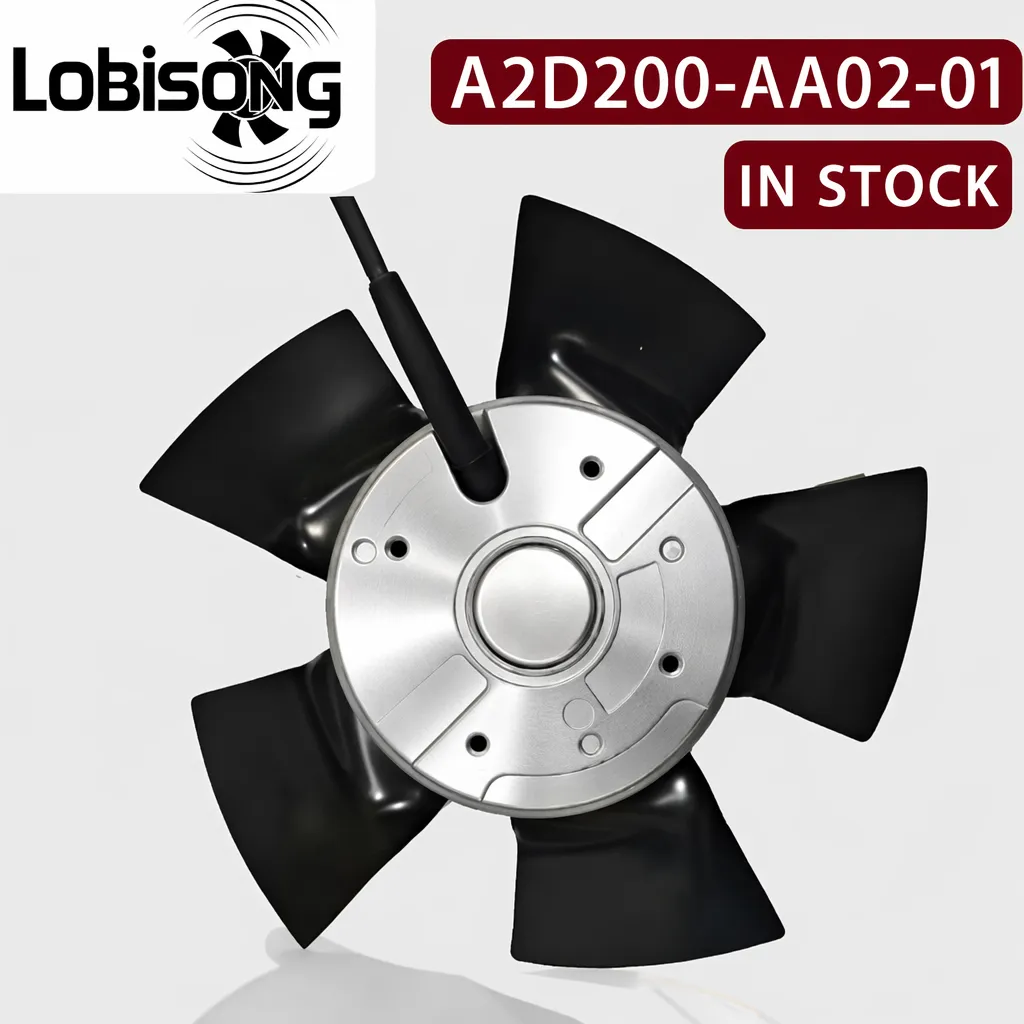
Big production halls often place heat-generating equipment far from the main air handling unit, leaving remote corners to overheat. A duct industrial axial fan solves this by pushing conditioned cooling air through ductwork straight to those distant hotspots. This approach keeps motors, drives, and enclosures within safe temperature limits without relocating the AHU. It also trims the cost of a full climate rebuild because the fix targets the exact zone that fails, not the entire building volume.
In one metalworking plant, a row of VFD cabinets sat 28 meters from the nearest AHU. Summer ambient plus cabinet heat load pushed internal temperatures past 55°C, tripping drives during peak shifts and halting two production lines. Moving the air handling unit was impractical, and spot coolers only shifted the problem to the next aisle. This is exactly where a duct industrial axial fan earns its place: it carries cooling air across the gap that fixed ventilation cannot cover, restoring stable enclosure temperatures without rewiring the room.
A standard wall axial fan moves air where it can, but a ducted setup controls direction and reach. By coupling the axial fan to sheet-metal ductwork, the same airflow is guided to a defined outlet near the hot zone. Cooling capacity stays concentrated instead of dissipating into the open room, which matters when the hotspot sits behind a wall or above a machine. Selecting a duct industrial axial fan with adequate CFM is the first step before any duct is drawn, because flow and pressure must be specified together rather than guessed. Good ventilation design then balances supply and return so heat is removed, not just stirred, and the room pressure stays neutral.
Every run of duct adds system resistance, so the selected axial fan must provide enough static pressure to overcome it. Undersized pressure leaves the far outlet weak; oversized pressure wastes energy and creates noise that disturbs nearby stations. Engineers estimate friction loss per meter and add losses for each elbow, then choose a duct industrial axial fan whose curve meets the required static pressure at the target airflow. A fan curve plotted against the real run prevents both stall at the outlet and wasted input power. Field checks on similar halls show that ignoring elbow loss is the most common cause of weak remote outlets.ducted axial fan, industrial cooling fan, duct sizing, static pressure, remote equipment cooling
Duct sizing drives efficiency more than most buyers expect. A small diameter forces high air velocity, which raises friction loss and starves the distant equipment enclosure of cooling air. A larger, correctly sized duct keeps velocity moderate and protects delivered volume across a long run. When the duct industrial axial fan is matched to the right diameter, the stream reaches the hotspot without costly pressure loss, and the motor runs inside its efficient band instead of fighting the pipe. Size the duct from the design airflow, not from the smallest pipe that fits the ceiling.ducted axial fan, industrial cooling fan, duct sizing, static pressure, remote equipment cooling
Duct routing should favor the shortest run with the fewest bends between fan and hotspot. Each elbow adds resistance and can cut delivered airflow by several percent, so a long detour quietly defeats the design. Where a turn is unavoidable, use long-radius bends and keep transitions smooth to limit turbulence. Seal joints where the duct industrial axial fan connects to the main so no cooled air leaks before reaching the equipment, and keep the duct clear of heat sources that would warm the supply before it arrives.
Air velocity must stay high enough to reach the remote zone yet low enough to avoid turbulence and noise. Overspeed erodes cooling capacity through friction, while underspeed lets warm room air dilute the stream and lowers the temperature drop at the target. Measure velocity at the outlet and compare it to the design point; adjust dampers or fan speed before trusting the install, and recheck after filters load, since dirt shifts the whole balance. Steady air velocity is what keeps the distant hotspot within its limit.
Thermal management of control rooms and enclosures is governed by practical safety expectations. OSHA guidance on workplace ventilation sets the baseline for acceptable heat exposure, while IEC motor standards and CE/UKCA marking confirm the fan and motor are built to spec. Specify a duct industrial axial fan with imported precision bearings and copper windings for steady duty in dust-laden lines, and confirm the IP rating matches the environment so the unit survives its location without early failure.
Reliability comes from routine checks, not luck. Inspect filters, verify static pressure at the outlet, and listen for bearing change each quarter to catch wear before it trips a line. Lobisong builds AC, DC, and EC fans with pure-copper motors and IP-rated protection for industrial enclosures; matched motors span PMDC, outer-rotor, and brushless three-phase types. Keep a spare duct industrial axial fan for critical nodes so a failure never stalls production, and log readings to track drift from the design point. Dust-laden pipelines benefit from more frequent filter changes to keep system resistance low.
A duct industrial axial fan remains the most practical way to carry cooling air from a distant AHU to isolated heat-generating equipment. Correct duct sizing, honest static pressure calculation, and clean duct routing turn a weak breeze into reliable remote cooling. Buyers should weigh delivered airflow and motor duty against the real heat load, then maintain the system on a fixed schedule so the distant hotspot stays safe through every summer peak.
How does a ducted axial fan reach equipment far from the AHU?
Answer: A ducted axial fan connects to ductwork that carries cooling air from the air handling unit to a remote outlet near the hot equipment. The fan supplies the static pressure needed to push air through the run, so heat is removed at the source instead of relying on general room ventilation. Correct duct sizing keeps velocity and delivered volume steady across the distance.
What duct size works for a long run to a hotspot?
Answer: Longer runs need larger duct to limit friction loss and protect airflow reaching the distant enclosure. Size the duct so design velocity stays in a moderate band; overspeed raises resistance and noise while underspeed lets warm air dilute the stream. Account for each elbow and transition, then verify delivered volume at the outlet before commissioning the system.
Which standards apply to industrial cooling fans?
Answer: OSHA ventilation guidance sets workplace heat baselines, while IEC and CE/UKCA confirm motor and fan build quality for industrial duty. Specify copper-winding motors with precision bearings and the right IP rating for dust-laden lines. Matching the duct industrial axial fan to certified components supports safe, auditable installations in control rooms and equipment enclosures.
How often should the ducted system be inspected?
Answer: Inspect filters and outlet static pressure every quarter, and check bearings for change in sound or vibration. Clean duct interiors during scheduled downtime to avoid dust buildup that raises system resistance. Keep a spare fan module for critical nodes so a fault never stops production. Log readings to track drift against the design point.
Can ducted axial cooling replace a full HVAC upgrade?
Answer: In many remote-hotspot cases a ducted supply avoids relocating or upgrading the AHU by delivering cooling air exactly where heat builds. It is a targeted fix, not a replacement for whole-facility climate control. For a single distant cabinet row or machine cell, targeted ducted supply often restores safe temperatures at far lower cost than a full system rebuild.

2026/09/30
Cement cabinets choke on dust. Learn the filter rule for an industrial cabinet cooling fan: G4/F7 media, IP rating, and pre-filter care.

2026/10/07
Right wall-mount height for an industrial axial exhaust fan: room volume, free clearance, brackets, and recirculation control.

2026/10/08
An ec motor fan links to BMS via Modbus, 0-10V and PWM for demand-based cooling, energy scheduling and automatic sensor-driven speed control.

2026/10/06
A radial exhaust fan removes grease, fumes, and odors from food-processing workshops with capture velocity and hygienic washdown design.

2026/10/05
Learn antistatic treatment for industrial cabinet cooling fan in electronics workshops—ESD-safe housing, ionizable plastics, and cleanroom compatibility.

2026/10/04
Discover how a brushless dc servo delivers precise wind speed control for laboratory cooling fans with closed-loop PID feedback and laminar airflow.
