 EN
EN
What filter matching rule for dust proof cabinet cooling fan operating in cement factories
2026/09/30
Cement cabinets choke on dust. Learn the filter rule for an industrial cabinet cooling fan: G4/F7 media, IP rating, and pre-filter care.

2026/09/18
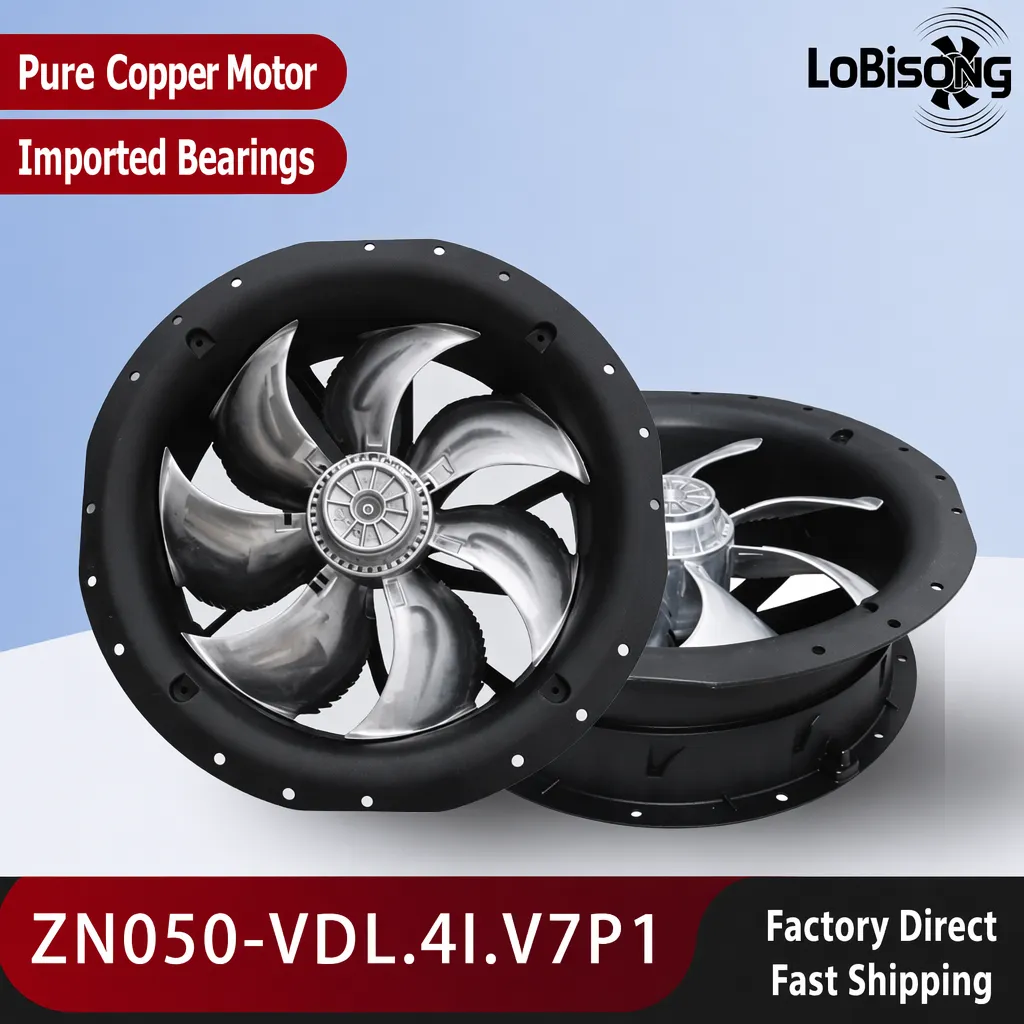
Modern cooling systems rely on precise airflow regulation to keep equipment safe and energy consumption low. Selecting the right control mode for ec fans and drives determines whether a cooling loop runs efficiently or wastes power through constant full-speed operation. This guide walks through the practical options that buyers and engineers meet when specifying intelligent cooling for enclosures, server rooms, and ventilation ducts.
An EC motor integrates the motor and an electronic commutator into one sealed unit, so speed changes happen without external inverters. Because ec fans and drives carry built-in control electronics, the same product supports several command methods from a single wiring interface. That flexibility lets a designer pick the simplest signal matching the building's existing controller and enables variable speed operation with smooth acceleration. The brushless design also reduces heat at the motor, improving reliability in dusty industrial ducts and prolonging service intervals.EC fan control, intelligent cooling, EC drive, fan speed control, BACnet cooling
A fan moving air at fixed speed consumes power roughly proportional to the cube of its speed. Dropping speed by twenty percent can cut energy by nearly half. ec fans and drives make that reduction practical because the controller modulates output to the actual thermal load instead of running flat out. For procurement teams, the payback comes from lower electricity bills and reduced enclosure heat stress, which aligns with IEC motor efficiency expectations. Standards such as NFPA guidance on electrical room safety and OSHA ventilation expectations push designers toward controllable airflow rather than fixed fans. Good thermal management also protects sensitive drives and reduces nuisance trips that stop production lines.EC fan control, intelligent cooling, EC drive, fan speed control, BACnet cooling
The 0-10V method sends a direct current voltage where ten volts equals full speed and zero volts stops the fan. Many HVAC panels and temperature controllers already output this signal, so 0-10V remains the lowest-cost path for retrofit projects. The drawback is analog drift and limited feedback; the host knows the set point but not the real RPM. For single fans in cabinets, that trade-off is usually acceptable, and wiring stays simple for maintenance staff. A small filter at the input reduces electrical noise on longer cable runs. Field teams should label the signal wire clearly, because mixing 0-10V with a 4-20mA loop causes misreading and unexpected fan behavior.
Pulse-width modulation switches the supply rapidly to vary average power, giving finer resolution than analog voltage. PWM suits DC-based boards and embedded controllers where a microcontroller pin drives the fan directly. Engineers value PWM for fast response and low noise at partial load. When specifying ec fans and drives with PWM, confirm the acceptable frequency range, because an unsupported signal can cause hum or erratic starting behavior that stresses bearings and shortens service life in demanding sites. Keep the duty cycle within the documented band to maintain stable airflow.
Modbus over RS485 lets a building management system poll each fan for speed, current, and fault status across a twisted-pair bus. This visibility turns a cooling loop into a monitored asset rather than a blind load. Maintenance crews can spot a failing bearing through rising current before it trips. For multi-fan server room installations, Modbus keeps commissioning simple and avoids running separate analog wires to every unit. Facility managers pairing ec fans and drives with Modbus can set alarm thresholds that page staff during abnormal heat events. Periodic trend review of current draws builds a maintenance record that supports long-term reliability planning.EC fan control, intelligent cooling, EC drive, fan speed control, BACnet cooling
Constant-pressure control uses a duct pressure sensor and a PID loop so the fan holds a set pressure despite changing filter clog or open dampers. BACnet then exposes that loop to the wider building automation network using a standard object model. These strategies suit large air-handling units where demand shifts through the day. The EC motor efficiency at part load makes constant-pressure economical rather than wasteful during off-peak hours. Trend logs from BACnet also help plan filter replacement before airflow drops below the design target, keeping the system efficient.
A regional data services firm cooled a control room with manually set AC fans left at full speed year-round. Summer peaks pushed enclosure temperatures toward alarm, while winter ran the same fans at needless full power. After replacing them with ec fans and drives on 0-10V from a room-temperature controller, the fans tracked load automatically. Energy efficiency improved, and a near-overheat incident during a heat wave was avoided because speed rose with temperature instead of staying fixed, keeping the server room within its safe operating band. The upgrade paid back through lower utility cost within a single cooling season.
Start with the existing controller: a standalone thermostat favors 0-10V or PWM, while a networked plant benefits from Modbus or BACnet. Match the strategy to the load profile—steady cabinet cooling needs only analog, but variable duct demand calls for constant-pressure. Verify airflow ratings, bearing type, and ingress protection against the site. Request CE or UKCA marks for European delivery and review the supplier's test report before purchase. ec fans and drives should be selected against the real thermal load, not a generic nameplate, to protect the investment and ensure safe operation. During operation, clean filters on schedule and log inlet temperature so the control mode keeps delivering the expected airflow.
What is the simplest control mode for a single EC fan?
Answer: The simplest option for one fan is 0-10V analog control, where a temperature controller outputs a voltage that sets speed directly. No network or software is required, which keeps installation cost low. PWM works similarly for DC boards. Choose analog when central monitoring is not needed and the application is a single enclosure or cabinet with a stable controller already in place. This approach reduces commissioning time for small projects.
How does Modbus control improve fan maintenance?
Answer: Modbus over RS485 lets a building management system read each fan's speed, current, and fault flags. Rising current often signals a worn bearing before failure occurs, so crews can schedule service during planned downtime. This visibility reduces unexpected trips in server room and control room cooling. The communication also simplifies commissioning across many fans on one bus without separate analog wiring to every unit, lowering labor cost.
When should constant-pressure control be used?
Answer: Constant-pressure control suits systems where duct resistance changes, such as filters clogging or dampers opening through the day. A pressure sensor feeds a PID loop that adjusts fan speed to hold a set point. This keeps airflow steady for the load instead of over-running. It is common in air-handling units and ventilation ducts where demand varies and energy efficiency matters most for operating cost.
Can EC fans connect to a building automation network?
Answer: Yes. EC fans and drives support BACnet through a gateway or integrated interface, exposing speed and status as standard network objects. This lets facility managers supervise cooling alongside HVAC and lighting from one platform. Modbus or RS485 is another route for plants without BACnet. Confirm protocol support and the supported register map before ordering to ensure smooth integration with existing controllers and avoid costly rework.
What should buyers verify before purchasing EC fans?
Answer: Buyers should confirm airflow and static pressure match the enclosure, check bearing type and ingress protection for the site, and request CE or UKCA marks for European delivery. Ask the supplier for a test report and verify the supported control mode matches the existing controller. Review the operating temperature range and cable length limits to avoid commissioning problems after the equipment arrives on site and enters service.

2026/09/30
Cement cabinets choke on dust. Learn the filter rule for an industrial cabinet cooling fan: G4/F7 media, IP rating, and pre-filter care.

2026/10/07
Right wall-mount height for an industrial axial exhaust fan: room volume, free clearance, brackets, and recirculation control.

2026/10/08
An ec motor fan links to BMS via Modbus, 0-10V and PWM for demand-based cooling, energy scheduling and automatic sensor-driven speed control.

2026/10/06
A radial exhaust fan removes grease, fumes, and odors from food-processing workshops with capture velocity and hygienic washdown design.

2026/10/05
Learn antistatic treatment for industrial cabinet cooling fan in electronics workshops—ESD-safe housing, ionizable plastics, and cleanroom compatibility.

2026/10/04
Discover how a brushless dc servo delivers precise wind speed control for laboratory cooling fans with closed-loop PID feedback and laminar airflow.
