
 EN
EN
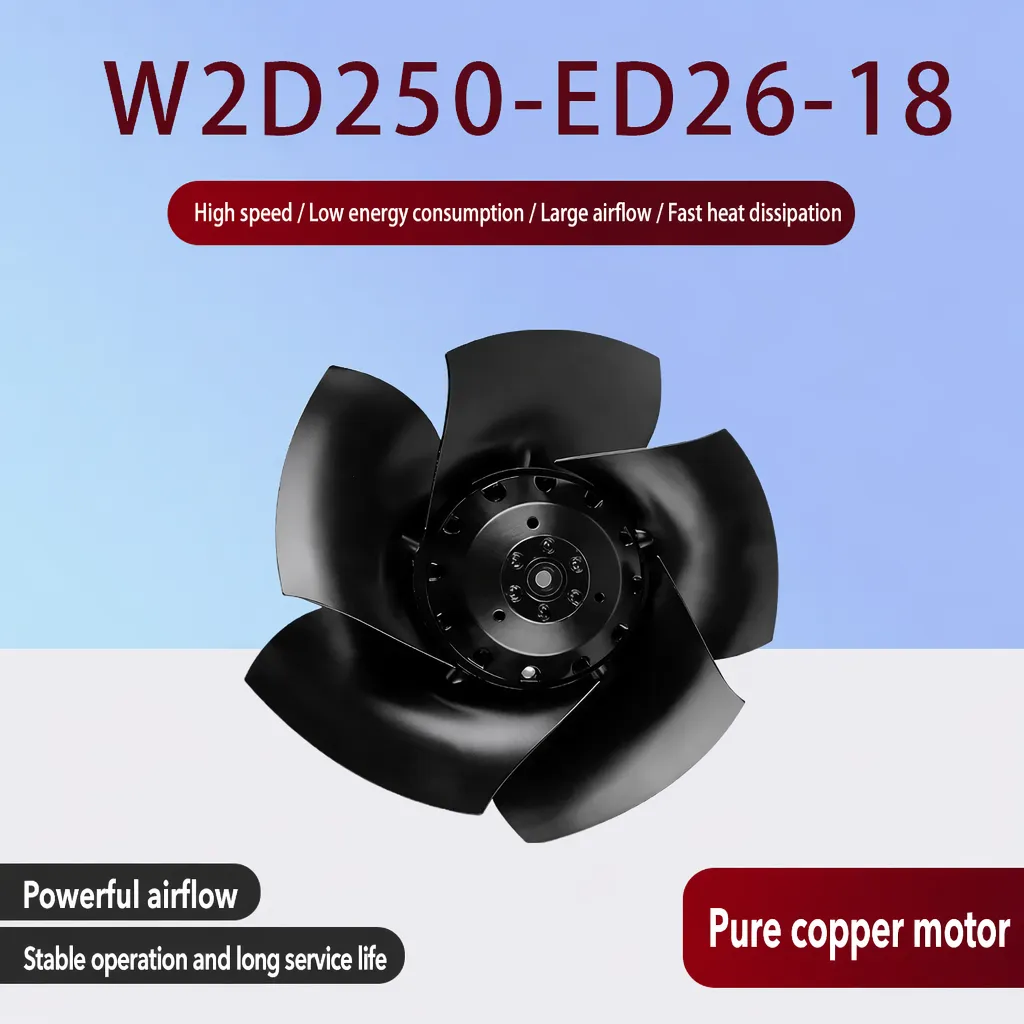
Why Silent Industrial Axial Fans Fit Laboratory Precision Instrument Constant Temperature Rooms
Anyone who has spent time around sensitive metrology equipment or analytical instruments knows that a poorly selected fan can quietly undermine months of careful calibration. Temperature drift, vibration interference, and acoustic disturbance are not theoretical concerns. They show up in measurement scatter, equipment alarms, and shortened calibration intervals. In constant temperature rooms designed to house precision instruments, the air management system is not a background utility; it is a critical parameter in the measurement chain itself.
That is why more laboratory engineers and facility managers are specifying a silent industrial fan—specifically axial-type units—when designing or retrofitting the cooling circuits in these environments. The fit is not accidental. It follows from application-level reasoning that holds up when you look at the details.
What Makes a Constant Temperature Precision Instrument Room Different
A standard server room or factory floor HVAC installation can tolerate noise levels above 60 dB(A) and moderate vibration if airflow targets are met. A laboratory constant temperature room operates under entirely different constraints:
- Temperature stability tolerance: Precision gravimetric balances, interferometers, and coordinate measuring machines (CMMs) may require ambient temperature stability within ±0.1°C or tighter. Any cycling or surge in airflow that creates localized thermal gradients can push a measurement out of spec.
- Vibration sensitivity: The precision measurement and metrology community broadly recognizes that exceptional vibration isolation is not optional—it is a design requirement. Fan-induced vibration transmitted through mounting structures can couple directly into optical benches or suspended measurement platforms.
- Noise environment: A quiet office or library registers around 40 dB(A). Many precision instrument labs target similar or lower ambient levels to avoid acoustic excitation of resonant structures. That places a strict ceiling on permissible fan noise output.
These three constraints—temperature stability, vibration isolation, and acoustic limits—define the selection criteria that a fan must meet. When you run through that checklist, silent industrial axial fans match the profile in ways that many alternative designs do not.
Why Axial Fan Geometry Supports the Lab Environment
The axial flow principle—air moves parallel to the fan shaft—gives this fan type several characteristics that translate well into constant temperature room applications.
First, low static pressure operation. Constant temperature rooms are typically served by short, low-resistance duct runs or direct-mount arrangements rather than the high-resistance ducted networks found in large HVAC installations. Axial fans are optimized for precisely this high-volume, low-static-pressure regime. Forcing a high-static-pressure fan into a low-resistance system often means running it far outside its design point, which generates unnecessary noise and vibration—exactly what you cannot afford in a lab.
Second, backward inclined blade profiles in modern silent industrial axial fans reduce turbulence-generated noise at the blade tip. Turbulence noise is a dominant source of fan acoustic output, and a low noise backward inclined fan design directly addresses this by smoothing the air separation at the trailing edge. The result is a measurably quieter unit at equivalent airflow—without resorting to large silencer housings that add bulk and pressure drop.
Third, a well-engineered axial fan with a dynamically balanced impeller and vibration-damped mounting brackets transmits minimal mechanical excitation to the host structure. This is not an easy specification to verify from a datasheet alone—it requires attention to how the manufacturer validates balancing quality—but it is achievable in purpose-built silent industrial fan products.
The Role of EC Variable-Speed Motor Technology
Temperature stability in a precision instrument room is not just about removing heat; it is about removing the right amount of heat at the right rate without overcooling and without creating temperature gradients. A fan running at a fixed speed cannot do this reliably when the thermal load changes—and in an active lab, the load changes constantly as instruments cycle, operators enter and leave, and ambient building conditions shift.
This is where low noise EC fans and drives offer a meaningful advantage. EC (electronically commutated) motors with variable-speed drive capability allow the fan to modulate airflow in response to a temperature signal, maintaining setpoint within a tighter band than a fixed-speed unit can achieve. The variable-speed approach also delivers a secondary noise benefit: running at lower speeds during periods of reduced thermal load reduces both blade-pass frequency noise and motor harmonic emissions simultaneously.
An energy efficient low noise axial air fan built around EC motor technology can achieve part-load power reductions of 30–50% compared to equivalent-capacity AC-motor units—relevant not just for energy cost but because lower power at the motor means lower heat generation within the fan unit itself, reducing the fan's own contribution to the room's thermal load.
One misconception worth clarifying directly: Noise specs on fan datasheets—whether expressed as sound pressure level (SPL) at a fixed distance or sound power level (SWL) per ISO 13347-2—are measured under controlled test conditions. Real-world installation factors such as duct inlet turbulence, mounting surface resonance, and proximity to reflective walls can shift the actual acoustic performance by several dB above or below the rated figure. ANSI/AMCA 320-23 provides the measurement protocol, but selecting a silent industrial fan with substantial headroom below the lab's noise budget is a more robust strategy than targeting the threshold exactly.
Application Scenario: What a Properly Specified Silent Industrial Fan Delivers in Practice
Consider a constant temperature room housing precision balance equipment and optical comparators. The thermal management designer selects silent industrial axial fans with EC variable-speed drives, backward inclined impellers, and elastomeric vibration mounts. The outcome in a well-executed installation typically includes:
- Continuous airflow that responds to thermal load variation, holding the room within the balance manufacturer's stated operating temperature range throughout the working day.
- Fan noise that falls below the room's ambient target, measured at the instrument positions rather than at the fan unit itself.
- Vibration levels at the measurement bench that are attributable to building structure and foot traffic rather than the air management system.
- Reduced maintenance intervention compared to higher-speed, fixed-RPM units because the EC motor operates for more hours at moderate speed rather than constant maximum output.
These outcomes do not require anything exotic. The right result comes from specifying the correct category of fan—silent, axial, EC-driven—with appropriate blade geometry and mounting design for the application at hand.
Selection Considerations for Lab Procurement Teams
When evaluating silent industrial fan options for a precision instrument constant temperature room, a few parameters carry more weight than the general specifications:
- Measured noise at operating point: Request SPL data at the actual intended operating speed, not just the maximum-speed rating. Variable-speed EC fans will run significantly quieter than their datasheet maximum at typical partial-load conditions.
- Impeller balance grade: G2.5 or better per ISO 1940-1 is a reasonable minimum requirement for vibration-sensitive environments. Ask suppliers to confirm the balancing standard applied.
- Mounting interface: Elastomeric anti-vibration mounts are standard on purpose-built silent industrial fan assemblies. Verify that the mounting hardware is included or specified rather than assumed.
- Drive compatibility: For EC-type units, confirm that the speed control interface (analog 0-10V, PWM, or digital bus) is compatible with the room's temperature control system. Mismatched interfaces have caused more than a few otherwise well-chosen fan installations to operate at fixed speed.
Approaching the selection from an application-scenario perspective—rather than leading with maximum airflow or lowest price—is the framework that consistently produces installations where the fan system supports rather than compromises the precision environment it serves.
Conclusion
The fit between silent industrial axial fans and laboratory precision instrument constant temperature rooms is grounded in the alignment between what these environments demand and what this fan category delivers: low acoustic output, minimal vibration transmission, application-appropriate airflow characteristics, and the variable-speed precision that EC motor technology enables. For laboratory engineers specifying air management systems around sensitive instrumentation, the silent industrial axial fan is not simply a quiet fan—it is the right category of fan for the job.






