 EN
EN
What filter matching rule for dust proof cabinet cooling fan operating in cement factories
2026/09/30
Cement cabinets choke on dust. Learn the filter rule for an industrial cabinet cooling fan: G4/F7 media, IP rating, and pre-filter care.

2026/09/16
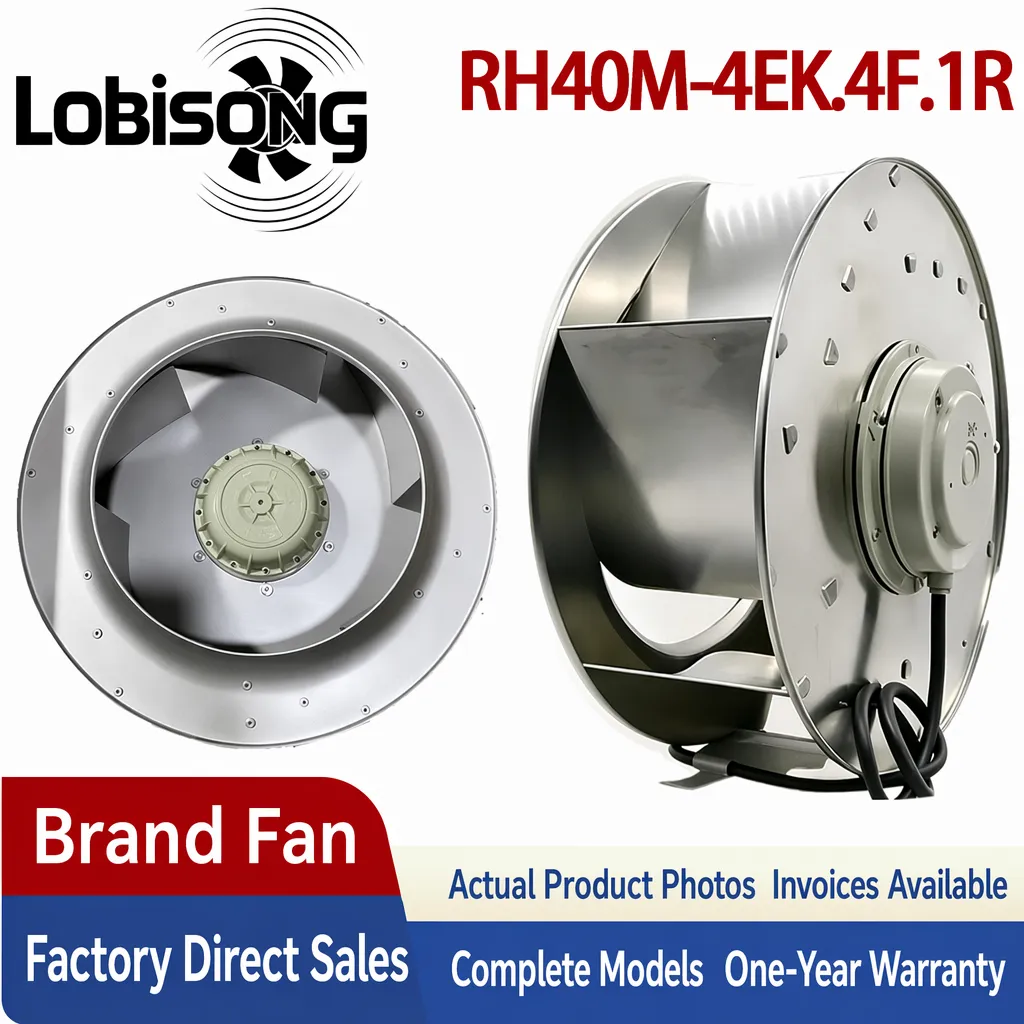
Specifying the right equipment cooling fan is only half the thermal story; the other half lives inside the wheel. Impeller geometry decides how much static pressure the unit can sustain, how quietly it runs, and how much airflow reaches the components that need cooling. Small, well-understood changes to the blades often deliver larger gains than fitting a bigger motor or a higher RPM rating.
An Eastern European control-panel builder shipped variable-frequency-drive cabinets whose internal temperature kept creeping past the limit during a summer thermal qualification. The installed equipment cooling fan was a standard axial unit sized only from a nameplate airflow figure, with no attention to the impeller shape behind the guard. Power modules ran close to their thermal overload threshold, and the filter fan could not move enough air once the inlet was restricted by dust.
Engineers replaced the generic wheel with a re-profiled impeller: fewer, wider blades with a steeper exit angle and a smaller hub ratio. The new fan blade design raised static pressure enough to push airflow through the restricted filter without raising RPM. Cabinet temperature dropped below the qualification limit, and broadband noise fell. Swapping to a purpose-built equipment cooling fan wheel turned a failing cabinet into a passing one. A separate Eastern European compressor manufacturer later adopted EC cooling fans from Lobisong on its compressor units; after eight months of operation the switch cut roughly 22% of total purchasing cost versus its previous European-brand fans, while keeping noise low and support responsive. Both cases show that geometry, not just motor brand, decides the outcome.
Blade count sets the trade-off between smooth flow and blockage for every equipment cooling fan. Too many blades raise drag; too few let flow leak around the trailing edge. Chord length controls how much energy each blade adds per revolution, so a longer chord lifts static pressure at low RPM but grows solidity and noise. The inlet angle must match the actual flow angle entering the wheel, otherwise flow separates at the leading edge and efficiency collapses. The exit angle sets the swirl leaving the impeller; a backward-curved exit angle recovers more static pressure, which is why backward-curved centrifugal fans dominate enclosure duty.
Hub ratio — the hub diameter divided by the tip diameter — changes the annulus area available for airflow. A large hub leaves a narrow blade ring and caps volume flow, while a smaller hub extends the blade and lifts the operating point. Tip clearance between blade tip and housing wall is a leak path; every millimetre of gap sends a fraction of the delivered air back upstream, cutting cooling efficiency. Galvanized steel impeller construction resists corrosion in humid plants, and die-cast aluminum housing keeps the wheel concentric so the clearance stays tight. Imported precision ball bearings hold the running gap steady across the duty cycle and load range.
Computational fluid dynamics lets a designer see stall, separation and secondary flow before any metal is cut. CFD-based shaping trims the blade camber, smooths the inlet bell and rounds the trailing edge to lift heat dissipation per watt. An equipment cooling fan developed this way reaches its target with fewer prototypes. ISO 9001 governs the quality system behind repeatable impeller tooling, while IEC 60034 and the EN/IEC family cover motor and fan safety for exported units. These references give procurement a defensible reason to specify a documented, tested wheel.
Gains must be proven on a test rig, not assumed. A fan curve plots static pressure against airflow (in m³/h or CFM) so engineers can read where the operating point sits relative to the knee of the curve. Sound-pressure measurement on receipt catches a poorly balanced wheel. Outer-rotor brushless motors with pure copper windings and internal thermal overload protection keep the operating point stable when ambient temperature climbs toward the rated limit, protecting both the fan and the equipment it cools. PWM control lets the equipment cooling fan follow a thermal setpoint instead of running flat-out.
When sourcing a centrifugal or axial fan, read the datasheet for the full fan curve, not just a single free-air RPM number. Confirm the IP rating (IP44 or IP54) matches the enclosure environment, and check the operating temperature range — −40°C to +80°C or −25°C to +90°C by model. On receipt, spin the wheel by hand to feel for grit, verify the balance tag, and measure tip clearance against the drawing. PWM control compatibility matters when the fan must follow a thermal setpoint rather than run continuously at full speed.
Schedule inspection every six to twelve months depending on dust load, and wash the impeller when the pressure curve drops more than 10%. Watch for rising vibration, a tone near the blade-pass frequency, or a cabinet running hot under the same load — all point to a fouled or eroded wheel. Replace bearings before play grows enough to open the tip clearance, because a worn bearing both lifts noise and bleeds static pressure. Right-sized ventilation protects the drive train.
Impeller optimization is the fastest, lowest-cost route to higher equipment cooling fan performance when the motor and enclosure are already fixed. Blade count, chord length, inlet and exit angle, hub ratio and tip clearance each shift the static pressure, airflow and noise of the wheel in predictable ways. Backward-curved profiles, CFD-based shaping and ISO/IEC-aligned verification turn guesswork into measured gains, while disciplined inspection and maintenance keep those gains for the life of the unit.
What impeller parameter most affects cooling efficiency?
Answer: Blade exit angle and tip clearance dominate. A backward-curved exit angle recovers more static pressure per watt, while a tight tip clearance stops air leaking back through the gap. Both lift the operating point on the fan curve without raising RPM, so the same enclosure sees better heat dissipation and quieter running. Balance the two against blade solidity and noise targets during design.
How does blade count change fan performance?
Answer: Blade count trades flow smoothness against blockage. More blades smooth the pressure field but add wetted drag and weight; fewer blades cut drag yet allow leakage around the trailing edge. For a given duty, the optimum sits where chord length and solidity keep flow attached without choking the annulus. Centrifugal and axial wheels each follow a different optimum, so copy a proven count rather than guess from a similar size.
Can CFD replace physical fan testing?
Answer: CFD narrows the design space and reveals stall, separation and swirl before cutting metal, saving iterations. It does not replace a final rig test, because balance, bearing noise and real inlet conditions still vary. The reliable path pairs CFD-based shaping with a measured fan curve and on-receipt sound check. Treat simulation as a screening tool that points the wheel in the right direction, then confirm with data.
Which standards apply to exported cooling fans?
Answer: ISO 9001 covers the quality system behind repeatable impeller tooling, while IEC 60034 and the EN/IEC motor-and-fan safety series apply to exported units. CE and UKCA mark the European and UK declarations, and CCC covers the Chinese market. Specifying fans built to these references gives procurement a documented, tested basis and reduces the risk that a wheel fails thermal or safety qualification abroad.
How often should an optimized impeller be inspected?
Answer: For a well-built equipment cooling fan, inspect every six to twelve months based on dust load, and wash the wheel when static pressure falls more than 10% from the baseline curve. Check vibration and blade-pass tone, and replace precision ball bearings before play opens the tip clearance. Early bearing service protects airflow, noise and the enclosure temperature at once, preserving the gains the impeller was shaped to deliver.

2026/09/30
Cement cabinets choke on dust. Learn the filter rule for an industrial cabinet cooling fan: G4/F7 media, IP rating, and pre-filter care.

2026/10/07
Right wall-mount height for an industrial axial exhaust fan: room volume, free clearance, brackets, and recirculation control.

2026/10/08
An ec motor fan links to BMS via Modbus, 0-10V and PWM for demand-based cooling, energy scheduling and automatic sensor-driven speed control.

2026/10/06
A radial exhaust fan removes grease, fumes, and odors from food-processing workshops with capture velocity and hygienic washdown design.

2026/10/05
Learn antistatic treatment for industrial cabinet cooling fan in electronics workshops—ESD-safe housing, ionizable plastics, and cleanroom compatibility.

2026/10/04
Discover how a brushless dc servo delivers precise wind speed control for laboratory cooling fans with closed-loop PID feedback and laminar airflow.
