 EN
EN
What filter matching rule for dust proof cabinet cooling fan operating in cement factories
2026/09/30
Cement cabinets choke on dust. Learn the filter rule for an industrial cabinet cooling fan: G4/F7 media, IP rating, and pre-filter care.

2026/09/05
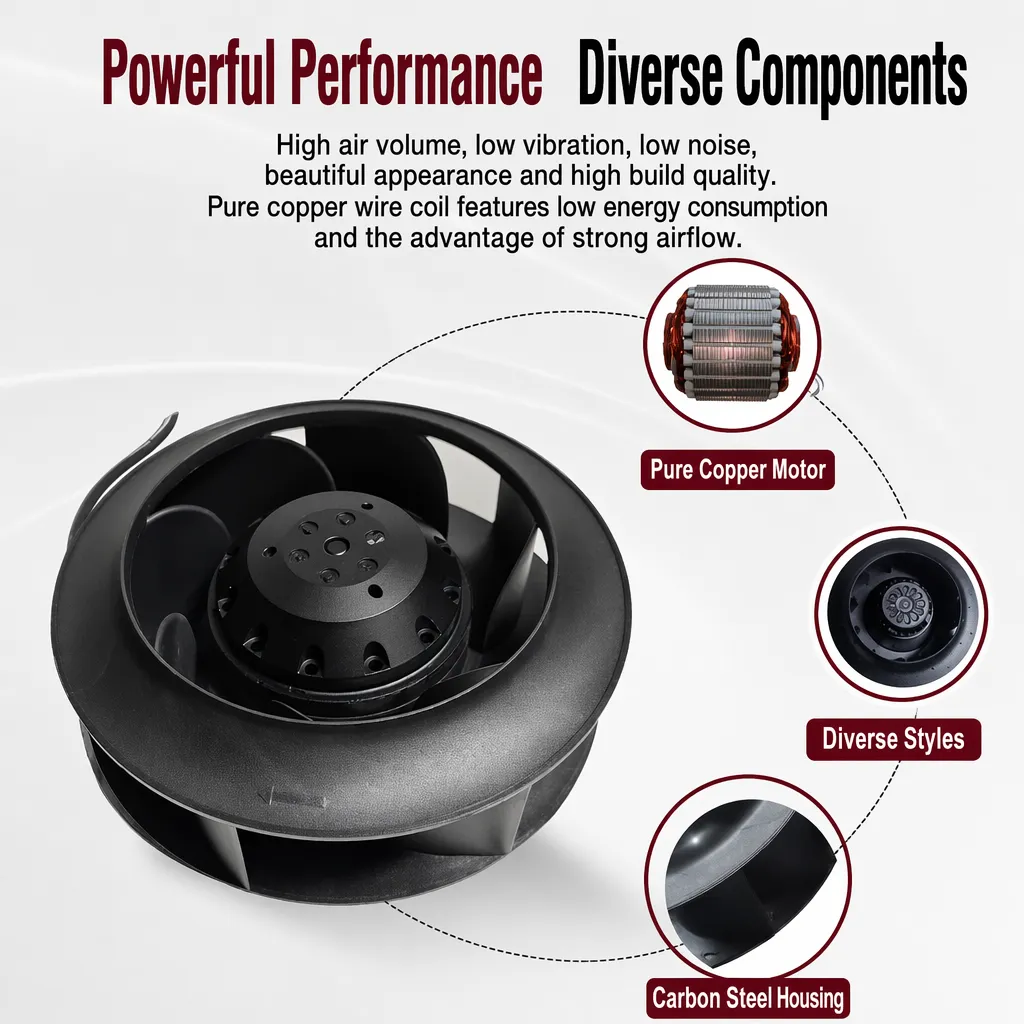
A fruit-processing plant in southern Europe runs continuous belt dryers for apples, herbs, and dried vegetables. Warm air carries large volumes of moisture out of the product, and without prompt removal the workshop fills with damp air that settles as condensation on walls and ceilings. An industrial centrifugal exhaust fan is the component that pulls this saturated air through the duct and discharges it outdoors before it recirculates. The gap between a controlled drying line and a mold-prone room often comes down to how reliably that air is moved, and to the static pressure the fan can hold while doing so.
The food drying process releases humidity faster than natural ventilation can handle. When relative humidity climbs, the surface moisture on trays stops evaporating and drying time stretches by hours. An industrial centrifugal exhaust fan addresses this by sustaining a steady airflow that carries damp air industrial centrifugal exhaust fan, food drying ventilation, moisture extraction, corrosion-resistant fanaway even when the duct run is long and bends several times. Stable extraction keeps the dew point low inside the workshop and protects both the product and the building structure from constant wet exposure. Lower humidity also trims the energy spent reheating incoming make-up air, which matters on a continuous line.
Left unchecked, trapped moisture becomes a direct threat to food safety and equipment life. Condensation drips onto floors and creates slip hazards, while warm damp air feeds mold colonies on packaging and walls. Metal supports and fasteners face corrosion, and electrical enclosures suffer ingress of humidity that shortens component life. A drying workshop that lacks disciplined ventilation soon faces spoiled batches, hygiene failures under audit, and rising maintenance cost that erodes margin. These losses are avoidable with the right airflow design and material choices.
An axial fan moves air along its axis and performs well at low resistance, but it loses volume quickly when the duct adds friction. A centrifugal design uses a rotating impeller to throw air outward into a scroll housing, converting speed into static pressure. This lets the industrial centrifugal exhaust fan maintain rated airflow against the friction of long ducts, filters, and moist air that is denser than dry air. The outcome is predictable extraction regardless of plant layout. A non-overloading power curve also means the motor will not surge as resistance changes through the shift.
Backward-curved blades resist overloading and stay efficient across a wide duty range. In a drying workshop the impeller spins in air loaded with moisture and fine particulate, so blade shape affects both pressure and cleanability. The industrial centrifugal exhaust fan therefore sustains negative pressure that draws damp air from the source and pushes it to the discharge point without backflow, keeping the whole ventilation path under control. Smooth blade surfaces shed residue during washdown and reduce the spots where bacteria can harbor between production cycles.
Housings built from galvanized steel resist rust wheindustrial centrifugal exhaust fan, food drying ventilation, moisture extraction, corrosion-resistant fanre condensation forms daily. A coated impeller adds a barrier against corrosive vapor and makes routine washdown safer. For a food plant, the industrial centrifugal exhaust fan must pair corrosion resistance with tolerance to cleaning chemicals. Where humidity is extreme, upgraded coatings extend service life and protect the precision bearing that keeps the rotor balanced during long shifts. Specifiers should confirm coating compatibility with the sanitizers used on site so the barrier is not stripped by routine cleaning.
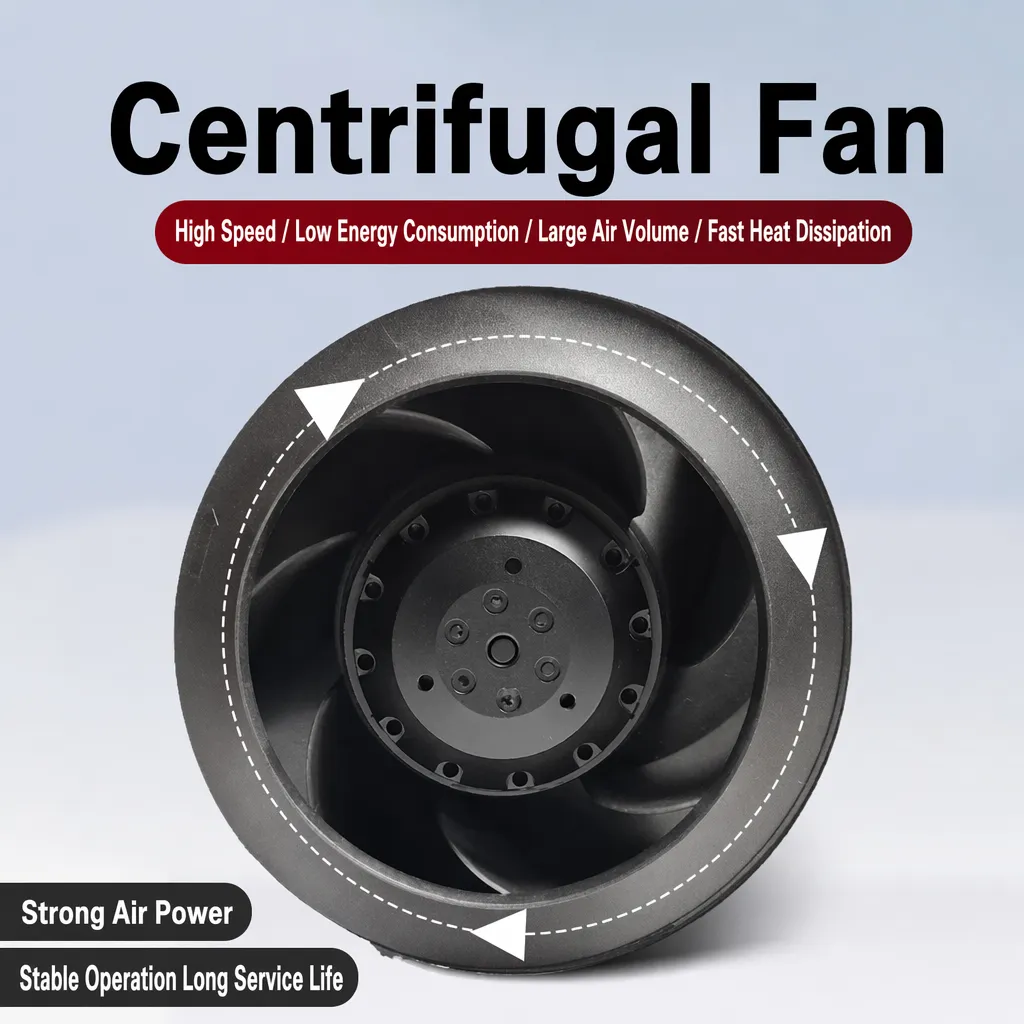
The drive unit uses a brushless motor with an outer rotor and pure-copper windings plus precision bearings, rated for continuous duty from −40 to +90 °C. A sealed construction keeps moisture and dust away from the windings, supporting a hygienic, food-safety-friendly design. Compliance with CE and IEC requirements gives buyersindustrial centrifugal exhaust fan, food drying ventilation, moisture extraction, corrosion-resistant fan documented confidence that the motor meets electrical and safety standards for export markets across Europe and beyond. The sealed enclosure also limits places where condensation can reach live parts, which simplifies the hygiene review during customer audits.
Specifying the industrial centrifugal exhaust fan starts with the duct layout and the peak moisture load. Buyers should size the unit to the highest humidity release, not the average, and choose corrosion-resistant materials matched to the cleaning regime. Install the duct with a slight slope and a drain point so condensate cannot pool and re-enter the airstream. A gasket at each sealed joint prevents leakage that would raise local humidity near the workshop ceiling. Early coordination with the plant engineer avoids costly rework once the drying line is commissioned.
A written cleaning schedule protects both airflow and audiindustrial centrifugal exhaust fan, food drying ventilation, moisture extraction, corrosion-resistant fant results. Inspect the impeller and housing for residue, check the bearing for noise or vibration, and verify static pressure at the duct tap. Align the routine with HACCP and ISO 22000 documentation so maintenance stays evidence-based. Replacing a clogged filter on time keeps the fan within its designed operating temperature and avoids energy waste across the drying season. Trending the static pressure reading over weeks also reveals gradual fouling before it degrades product quality.
A drying workshop that controls damp air protects product quality, building fabric, and audit standing at the same time. The right industrial centrifugal exhaust fan pairs stable static pressure with corrosion-resistant construction and a sealed brushless motor, delivering reliable ventilation through long, bending ducts. Matching material choice, duct slope, and a disciplined cleaning schedule turns extraction from a cost center into a controllable part of food-safety management.
What makes centrifugal fans better than axial fans for damp air in drying workshops? An axial fan loses volume when ducts add friction, while a centrifugal design holds static pressure against long runs and filters. An industrial centrifugal exhaust fan keeps airflow steady even when moist, dense air and several bends raise resistance. That stability prevents humidity from recirculating and protects the drying line from condensation and mold.
Why does moisture cause corrosion in food drying exhaindustrial centrifugal exhaust fan, food drying ventilation, moisture extraction, corrosion-resistant fanust systems? Damp air carries water and mild acids from produce that settle on metal surfaces and trigger corrosion. Without a coated impeller and galvanized steel housing, condensation eats into the fan and duct, shortening service life. Good material selection and sealed joints keep moisture away from bearings and windings, preserving airflow and protecting the hygiene of the drying workshop.
How should the duct be installed to handle condensate? Slope the duct gently toward a drain point so condensate cannot pool and flow back into the airstream. Use a gasket at sealed joints to stop leaks that raise ceiling humidity, and place the discharge above the weather line. A clean-out port simplifies inspection. These steps keep static pressure stable and prevent trapped moisture from undermining the drying workshop environment.
Can a brushless motor survive the temperature and humidity of a drying workshop? Yes. A brushless motor with an outer rotor and pure-copper windings runs continuously from −40 to +90 °C and resists humidity through sealed construction. The sealed design blocks moisture and dust from the windings, while CE and IEC compliance confirms the electrical safety level. Paired with corrosion-resistant housing, it delivers steady extraction without frequent intervention in demanding food plants.
Where do ISO 22000 and HACCP fit into exhaust fan maintenance? ISO 22000 and HACCP frame the cleaning and inspection routine as a documented control, not an afterthought. Logging impeller checks, bearing condition, and static pressure at the duct tap creates audit-ready evidence that the drying workshop stays hygienic. Tying maintenance to these standards helps buyers prove due diligence and keeps the ventilation system inside its designed operating envelope year round

2026/09/30
Cement cabinets choke on dust. Learn the filter rule for an industrial cabinet cooling fan: G4/F7 media, IP rating, and pre-filter care.

2026/10/07
Right wall-mount height for an industrial axial exhaust fan: room volume, free clearance, brackets, and recirculation control.

2026/10/08
An ec motor fan links to BMS via Modbus, 0-10V and PWM for demand-based cooling, energy scheduling and automatic sensor-driven speed control.

2026/10/06
A radial exhaust fan removes grease, fumes, and odors from food-processing workshops with capture velocity and hygienic washdown design.

2026/10/05
Learn antistatic treatment for industrial cabinet cooling fan in electronics workshops—ESD-safe housing, ionizable plastics, and cleanroom compatibility.

2026/10/04
Discover how a brushless dc servo delivers precise wind speed control for laboratory cooling fans with closed-loop PID feedback and laminar airflow.
